

The 20-Minute Problem
The solution involves Bitcoin

There is a mass of people managing the world’s money who have not done 20 minutes of reading about how money actually works now.

This isn’t a hot take. It’s something you can watch happen in real time, twice, in the span of a single week.
SCENE ONE: THE INTERVIEW
A few weeks ago, Jack Dorsey sat down with Nicolai Tangen for an episode of “In Good Company.” If you don’t know who Tangen is, you should, because he manages more money than you will ever conceptualize.
Tangen is the CEO of Norges Bank Investment Management. He runs Norway’s Government Pension Fund Global — the largest sovereign wealth fund on the planet. One-point-eight trillion dollars. Not billion. Trillion. Every Norwegian citizen on Earth is an indirect stakeholder in what this man decides to do with capital.
And Jack Dorsey had to explain to him what Bitcoin is.
Not the politics of it. Not the macro case. Not whether it belongs in a portfolio alongside Norwegian equities and emerging market debt. The basics. What a block is. What a key is. Why it matters that no single entity controls the ledger.
If you’ve spent any meaningful time building in this space — writing a smart contract, running a node, debugging a wallet integration at 2am — you know the feeling Dorsey had in that conversation. It’s a specific kind of fatigue. It’s not anger. It’s not condescension. It’s the slow realization that the gap between “the people building the thing” and “the people who will decide what happens to the thing” is not closing. It might be getting wider…
Bitcoiners have been having this conversation for more than a decade. Dorsey gave up on crypto’s broader ecosystem. He’s made that clear — “Bitcoin is money, not crypto” is practically his tagline at this point. But what you saw in that interview was something more tired than ideology. It was a man who has internalized a very simple technology trying to hand it to someone who commands $1.8 trillion and watching it not land.

And you realize: Tangen isn’t dumb. That’s what makes it hard to watch. He’s one of the most successful asset managers alive. He returned $247 billion to Norway in 2025 alone. He asks good questions. He’s curious. He’s engaged.
He just hasn’t done the 20 minutes.
The 20 minutes where you sit with a piece of paper and understand what a public key is and what a private key is and why one lets people send you money and the other one IS your money. That’s it. That’s the whole thing. It fits on an index card. The entire revolution that Dorsey has been trying to articulate for 12 years — the part that actually matters, the part that makes it different from PayPal — comes down to a concept you could teach a bright 14-year-old over lunch.
But the people at the top haven’t done those 20 minutes. And what that means in practice became violently clear three days later.
SCENE TWO: THE PHOTOGRAPH
On February 26th, 2026, South Korea’s National Tax Service put out a press release. It was a victory lap. They had just completed a major enforcement action, seizing 8.1 billion won — roughly $5.6 million — in cryptocurrency from 124 high-value tax delinquents.
They were proud of this. They wanted people to know. So they did what any government agency does when they want to show they’re tough on crime: they took photos of the evidence.
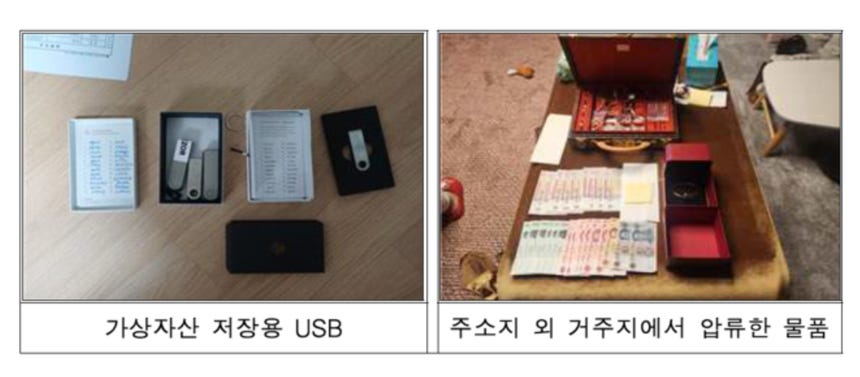
One photo showed a Ledger hardware wallet seized from a taxpayer they identified as “Mr. C.” It sat on a table, looking appropriately official.
Sitting next to it, clearly visible, completely unredacted, was a handwritten piece of paper.
On that piece of paper was the wallet’s mnemonic recovery phrase.
If you just felt something in your chest, you understand what happened next. If you didn’t, here’s the thing Nicolai Tangen hasn’t learned yet:
A mnemonic recovery phrase is a sequence of 12 to 24 ordinary English words. It is the master key to a cryptocurrency wallet. It is not a password that can be reset. It is not protected by a company’s security team. It is not recoverable through customer service. Whoever has those words has the money. That’s it. That’s the whole design. That’s the 20 minutes.
The NTS published those words in a press release that went out to every newsroom in South Korea.
By the early hours of February 27th — less than 24 hours later — someone had used the phrase (git rekt noob). On-chain data shows it clearly: a small deposit of Ethereum to cover transaction fees, then three batches of transfers draining approximately 4 million PRTG tokens from the wallet. Gone. About $4.8 million, moved in minutes by someone who simply read a government press release and typed in the words.
The government seized the crypto. They photographed the keys. They published the photograph. They lost the crypto.
On March 1st, the NTS released a statement offering its “deepest apologies for causing concern to the public.” South Korea’s finance minister pledged a full review of how seized crypto assets are handled. They announced plans to overhaul their procedures and bring in external consultants.

All because nobody in the room — not the enforcement officers, not the photographers, not the press team, not the editors, not the supervisors who approved the release (I don’t even feel bad honestly) — understood that those 24 words on that piece of paper were not a serial number or a case file reference. They were the money itself.
THE SAME PROBLEM
These two scenes look different. One is a polite podcast between two billionaires. The other is a slapstick government catastrophe. But they are the same scene.
In Oslo, a man who controls $1.8 trillion is learning for the first time why a private key matters. In Seoul, a room full of government officials proves they never learned at all.
And this is the part that should actually keep you up at night if you’re building in this space: these are not bad people. They are not corrupt. They are not trying to destroy anything. Tangen is a genuinely thoughtful steward of national wealth. South Korea’s NTS was doing its job — going after tax cheats, seizing assets, enforcing the law. They were doing the right thing.
They just hadn’t done the 20 minutes.

We are now 16 years into Bitcoin’s existence. We are deep enough into this that nation-states hold it on their balance sheets. ETFs trade it on the NYSE. Sovereign wealth funds have indirect exposure through their equity holdings. Tax authorities seize it as part of routine enforcement.
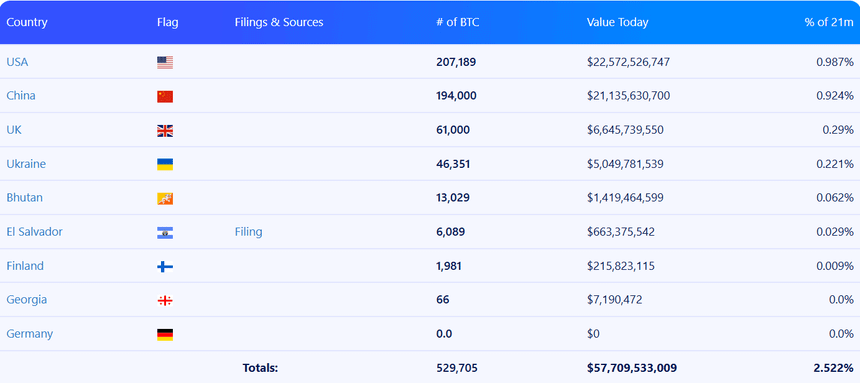
And the people operating these systems — the regulators, the fund managers, the law enforcement agencies, the legislators — are, in overwhelming majority, parsing this technology at the level of metaphor. They understand “digital gold” and “internet money” and “blockchain” as a vague gesture toward some kind of database. They do not understand that the money IS the key. The money IS the TECH.
This matters because these are the people writing the rules. They’re the ones deciding custody requirements, seizure procedures, regulatory frameworks, tax treatment, and whether your protocol is a security or a commodity. They are making those decisions without understanding the single most important mechanical property of the thing they’re regulating: that possession is not enforced by institutions. It’s enforced by math.
When you don’t understand that, you publish the math in a press release.
WHAT BUILDERS ALREADY KNOW
If you’re reading this and you build things — if you write code, ship products, run infrastructure — none of this is new to you. You’ve had the conversation. You’ve been Dorsey in that chair. You’ve watched someone in a position of authority ask you to explain something so fundamental that you have to go back to first principles and figure out where the bridge even starts.
The reason this matters right now, in March of 2026, is that the gap has consequences that it didn’t have before. When Bitcoin was a curiosity, the 20-minute gap was a dinner party problem. Now that it’s embedded in sovereign balance sheets and national tax enforcement, the 20-minute gap is a $4.8 million problem. Next time it could be a $4.8 billion problem. The math doesn’t care who’s holding the paper.

There is no policy solution to this. There is no regulatory framework that fixes “the people in charge don’t understand the tool.” The only fix is the thing that Dorsey was trying to do in that interview, which is the thing that builders have been trying to do for over a decade: explain it, again, clearly, patiently, to the people who need to hear it.
And hopefully, this letter makes it even easier than 20-minutes. Revisit some of my older work — it all still holds up today.
If this piece resonated with you, share it with someone who manages more money than they understand.

God-Willing, see you at the next letter.
GRACE & PEACE